TCLab Simulate Step Response
 |  | |  |  | | |  |
|---|
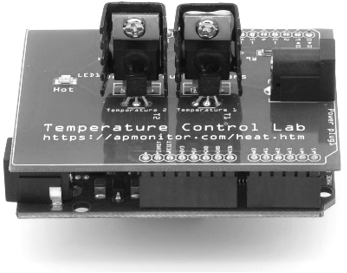
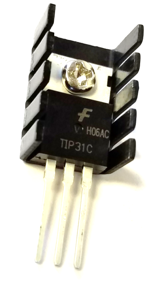
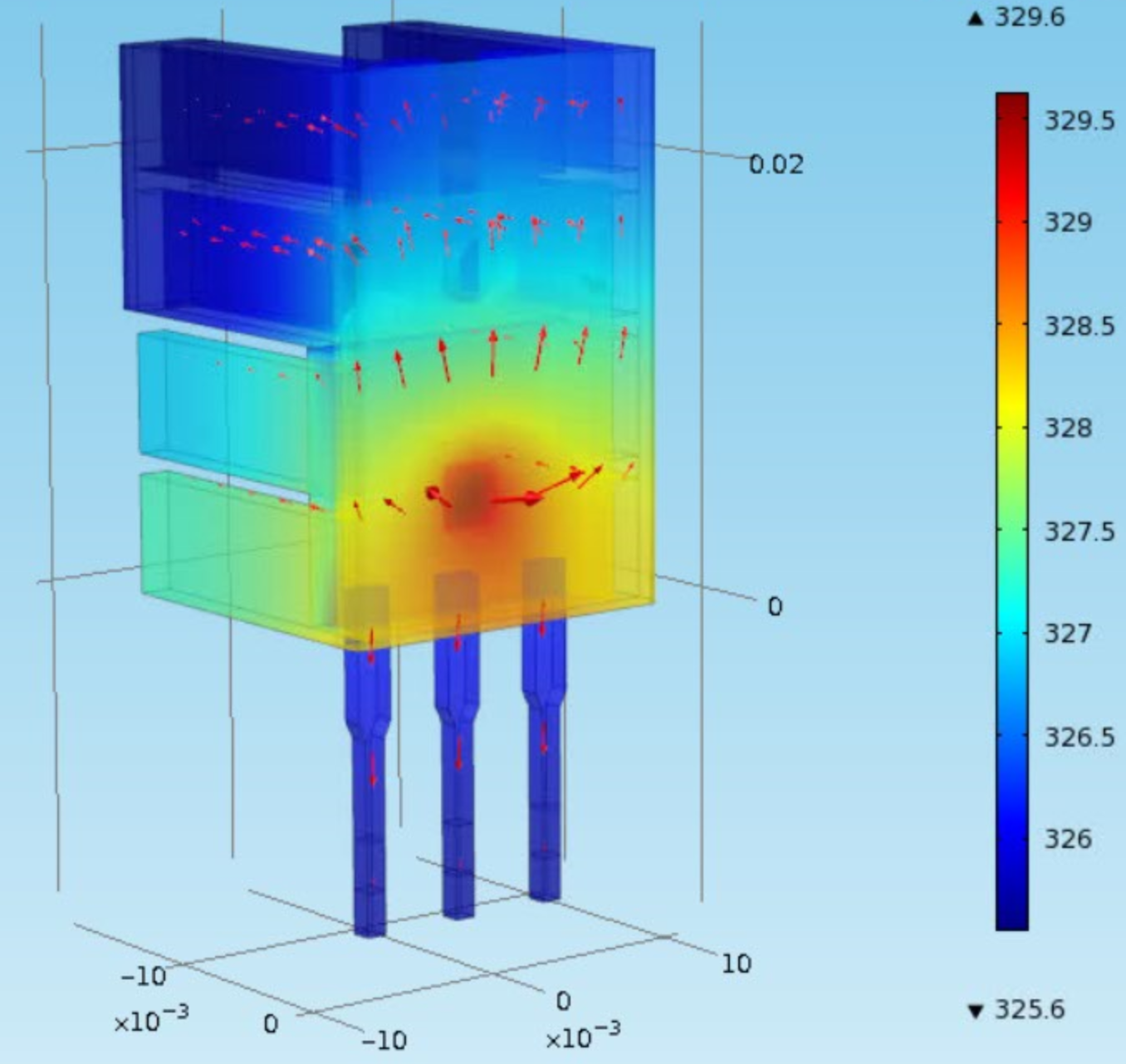
Objective: Simulate temperature response and compare to data from the TCLab.
 |  |
A simplified dynamic model of the Temperature Control Lab (TCLab) is the following:
$$\tau_p \frac{dT}{dt} = \left(T_a-T\right) + K_p \, Q$$
With the temperature initially at ambient temperature (`T_a`), simulate the change in temperature over the 5 minutes when heater Q is adjusted to 50%. Use a values of `\tau`=120 sec, `K_p`=0.8oC/%, and `T_a`=23oC. Compare the simulated temperature response to data from the TCLab. Add a simulation prediction to the script below to compare with the TCLab data.
TCLab Step Response
Use the following code to generate a step response or use the TCLab Web Interface.
import matplotlib.pyplot as plt
import tclab
import time
n = 300 # Number of second time points (5 min)
tm = np.linspace(0,n,n+1) # Time values
# data
lab = tclab.TCLab()
T1 = [lab.T1]
lab.Q1(50)
for i in range(n):
time.sleep(1)
print(lab.T1)
T1.append(lab.T1)
lab.close()
# Plot results
plt.figure(1)
plt.plot(tm,T1,'r.',label='Measured')
plt.ylabel('Temperature (degC)')
plt.xlabel('Time (sec)')
plt.legend()
plt.show()
Solutions
import matplotlib.pyplot as plt
from scipy.integrate import odeint
import tclab
import time
n = 300 # Number of second time points (5 min)
tm = np.linspace(0,n,n+1) # Time values
# data
lab = tclab.TCLab()
T1 = [lab.T1]
lab.Q1(50)
for i in range(n):
time.sleep(1)
print(lab.T1)
T1.append(lab.T1)
lab.close()
# simulation
def labsim(TC,t):
dTCdt = ((23-TC) + 0.8*50)/120.0
return dTCdt
Tsim = odeint(labsim,23,tm)
# Plot results
plt.figure(1)
plt.plot(tm,Tsim,'b-',label='Simulated')
plt.plot(tm,T1,'r.',label='Measured')
plt.ylabel('Temperature (degC)')
plt.xlabel('Time (sec)')
plt.legend()
plt.show()
import matplotlib.pyplot as plt
import tclab
import time
# pip install gekko
from gekko import GEKKO
n = 300 # Number of second time points (5 min)
# data
lab = tclab.TCLab()
T1 = [lab.T1]
lab.Q1(50)
for i in range(n):
time.sleep(1)
print(lab.T1)
T1.append(lab.T1)
lab.close()
# simulation
m = GEKKO()
m.time = np.linspace(0,n,n+1)
TC = m.Var(23)
m.Equation(120*TC.dt()==(23-TC)+0.8*50)
m.options.IMODE = 4 # dynamic simulation
m.solve(disp=False)
# Plot results
plt.figure(1)
plt.plot(m.time,TC,'b-',label='Simulated')
plt.plot(m.time,T1,'r.',label='Measured')
plt.ylabel('Temperature (degC)')
plt.xlabel('Time (sec)')
plt.legend()
plt.show()
Generative AI Learning
Use these prompts to test your understanding after completing the exercise. Direct the AI - do not let it do the exercise for you.
App: Run the step test in the browser with the TCLab Simulation Studio. Record a run on the built-in simulator (or a connected device) and compare the model prediction to the measurement without writing code.
What to Turn In
Submit a short report (PDF, 1-2 pages) that curates your results into a demonstration of what you learned. You may use Generative AI to help write the report, but you must guide it to the correct visualizations, justifications, and assumptions. Answer these questions:
- Include your step-response plot (simulation vs TCLab data or app measurement). What are the starting temperature and the temperature after 5 minutes at 80% heater?
- Where do the simulation and measurement disagree most, and what physical effect does the model miss?
- From the quiz prompt: one question you missed and the corrected answer.
- One claim the AI made about your data that you verified or refuted, with evidence.