ChE 436: Simulation Labs
Lab 2: Simulated System
The second lab is a virtual system that can be investigated through numerical simulation. The purpose of this lab is to apply more advanced topics that integrate the course material but do not have some of the limitations of physical systems.
- Simulation Control Lab Guidelines
- Simulation Control Lab Grading Sheet
- 2 page Executive Summary
- 5 minute Presentation
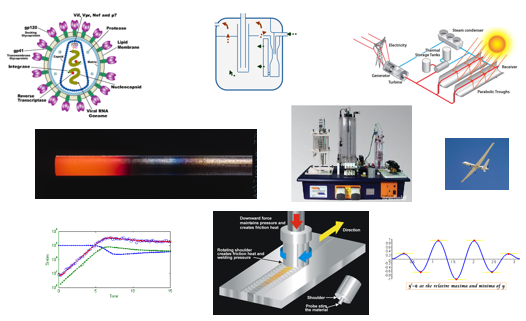
Project 1: Heated Rod Temperature Control
Project 2: Deployable Nuclear Reactor for Disaster Relief
Project 3: Minimizing Anti-viral use in HIV Control
Project 4: Distillation Control
Project 5: Control of a Reservoir Network
Project 6: Friction Stir Welding
Project 7: Smart-Grid Energy Storage
Project 8: Automated Pressure Control During Drilling
Other Student Control Projects
5 Steps to Begin a Technical Presentation
Students have an opportunity with the second lab to share a brief presentation on their project. Below are 5 steps for beginning a technical presentation.
Generative AI Learning
The simulation lab is where AI assistance is most powerful and where unverified AI output fails most visibly. Treat the workflow as: specify the model yourself, let AI help generate code, verify against known behavior, and defend every design decision in the report. Use these prompts to structure it:
AI-generated simulation code is a first draft, not a result. Before using any generated model in your report, verify at least one known solution (steady state by hand, energy or mass conservation, or an analytic small-signal response) and record the check - the executive summary is stronger with it.
Modern systems worth simulating: the same tools in these projects run today's highest-profile control problems - battery pack thermal management for electric vehicles, data-center cooling loops that track compute load, hydrogen electrolyzer operation against a varying power supply, and CO2 capture column regulation. If your team wants to propose one of these instead of Projects 1-8, bring a one-paragraph control specification to the instructor for approval; the smart-grid energy storage project (Project 7) is a natural template. The Distillation Column Control Studio and the other simulation and control apps are useful digital twins for scoping ideas before committing.
What to Turn In
The deliverables are unchanged: a 2-page executive summary and a 5-minute presentation (see the guidelines and grading sheet above). You may use Generative AI to help write and polish both, but you must guide it to the correct results, justifications, and assumptions. A strong summary answers these questions:
- What was the control objective, quantitatively, and how well did the final design meet it? Include the one plot that proves it.
- What verification did your model pass before you trusted it (limiting case, conservation check, known solution)? Show the check.
- What did the robustness test reveal - does the controller still work with a parameter 25% off or a larger disturbance - and what does that imply for real operation?
- Where did AI assist (model scaffolding, debugging, drafting), and give one instance where its output was wrong or misleading and how you caught it.
